
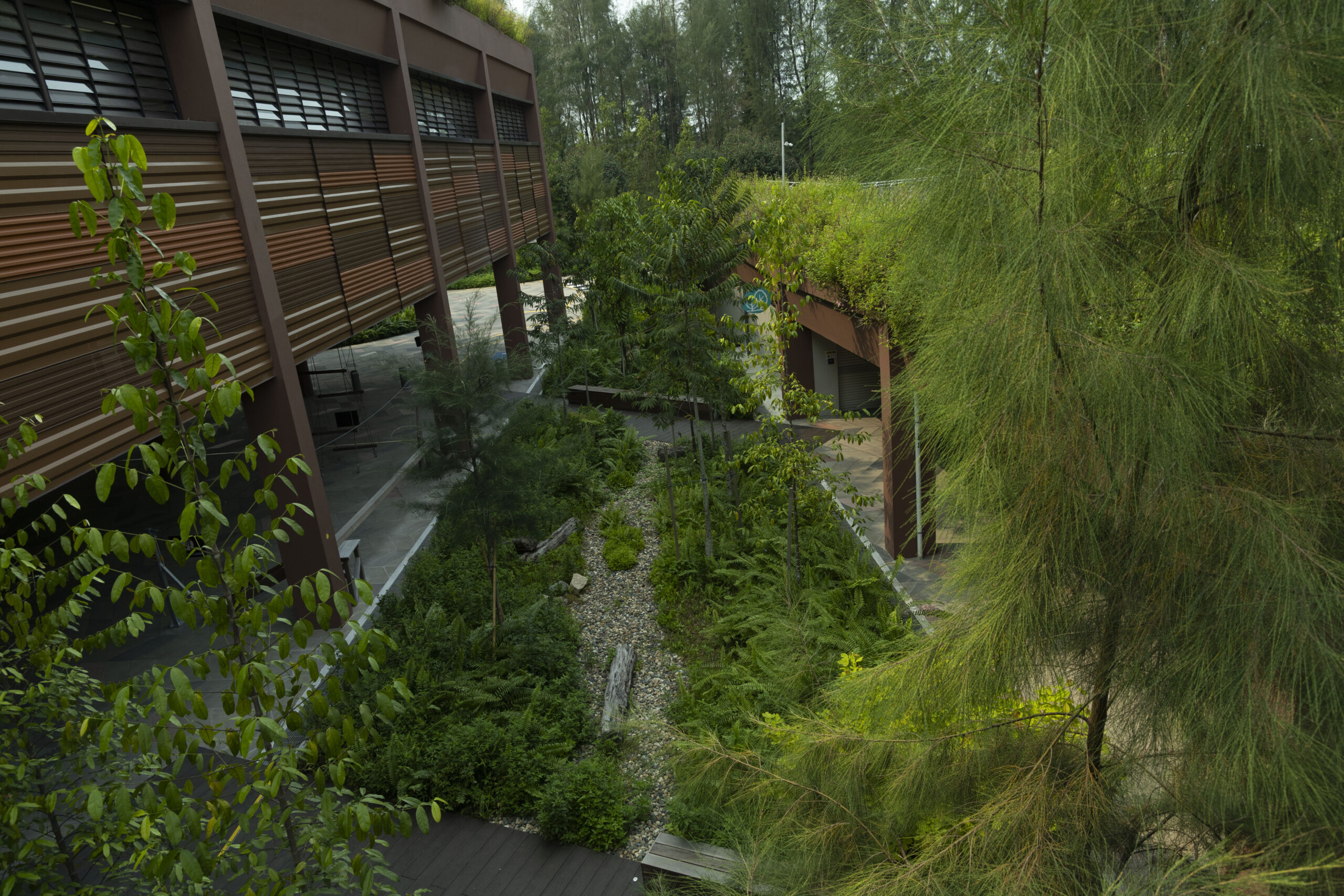
A beautiful landscape doesn’t have to stop at looking good, it can also support the birds, butterflies and other wildlife that make a green space feel genuinely alive. As Singapore pushes toward becoming a City in Nature, more property owners are asking how their landscapes can do double duty: pleasant for people, and welcoming for biodiversity too.
A landscape built only for visual effect tends to rely on a narrow range of plants, which limits what wildlife it can support. A biodiversity-friendly landscape is more varied — different flowering times, different leaf shapes, different plant heights — which naturally attracts more birds, butterflies, bees and other pollinators. The result is often a livelier, more dynamic space, not just a greener one.
There’s a practical upside too. Landscapes designed with ecology in mind tend to be more resilient, since a wider mix of species is less vulnerable to a single pest or disease wiping out the whole planting scheme.
Butterflies need two things: flowers for nectar, and specific host plants for their caterpillars to feed on. A butterfly garden that includes both tends to attract and sustain populations, rather than just passing visitors.
Trees and shrubs that produce berries, seeds or nectar-rich flowers give birds a reason to stay, not just fly through. Layering plant heights — ground cover, shrubs, canopy trees — also gives different bird species the habitat they prefer.
Ponds, floating wetlands and other water elements support a different layer of biodiversity altogether, from dragonflies to amphibians, while also adding visual interest to a landscape.
Plants native to Singapore and the region have evolved alongside local wildlife, so they tend to support more of it than exotic ornamentals. They’re also generally better adapted to our climate, which can mean less intensive maintenance over time.
A common misconception is that biodiversity-friendly means wild or untidy. In practice, it’s entirely possible to keep clean lines, defined beds and a polished appearance while choosing a plant palette that also supports wildlife. The difference is in plant selection and layering, not in how neatly the landscape is kept.
Where a more varied landscape adds visual interest for staff and visitors
Where birdsong and butterflies are genuine lifestyle draws
Where biodiversity supports broader City in Nature goals
Where guests often appreciate a landscape that feels alive, not static
You don’t need a full redesign to make a landscape more wildlife-friendly. A good first step is to ask your landscape contractor which parts of the current planting could be adjusted, for example swapping a few ornamental shrubs for native nectar plants when replacements are due.
If you’d like to explore what’s practical for your property, the Nature Landscapes team is happy to have a conversation.